



This guide contains three real medical school personal statement examples from accepted applicants, along with three of their earlier drafts and their own accounts of what changed.
Successful medical school personal statements rarely follow a formula. They take shape through weeks and months of brainstorming, experimentation, difficult choices, and revision. And even applicants who earn acceptances at some of the country’s most selective medical schools look back and see things they would do differently.
So what does writing a successful personal statement actually look like?
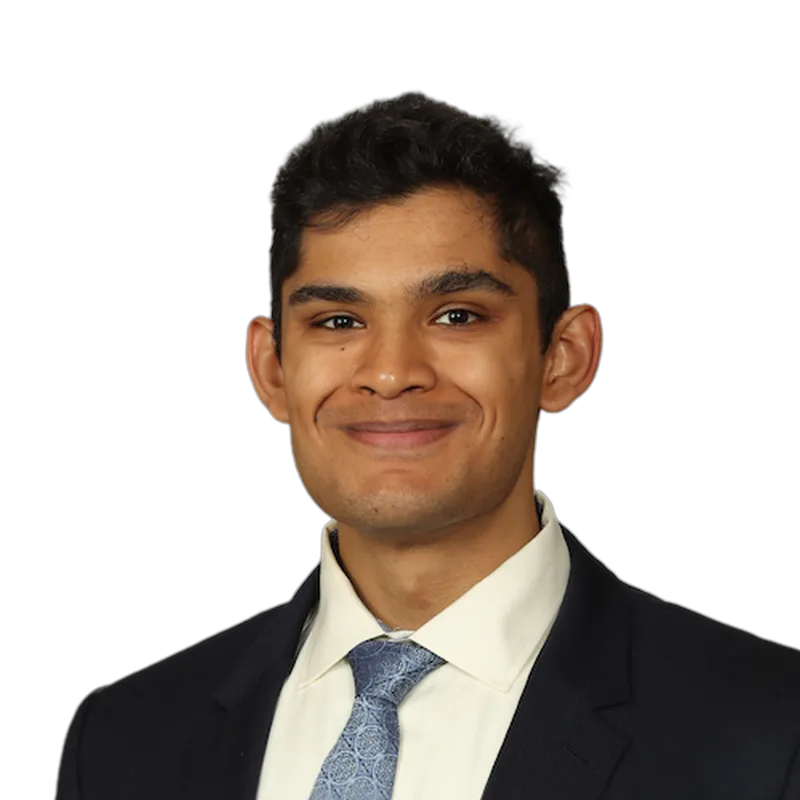
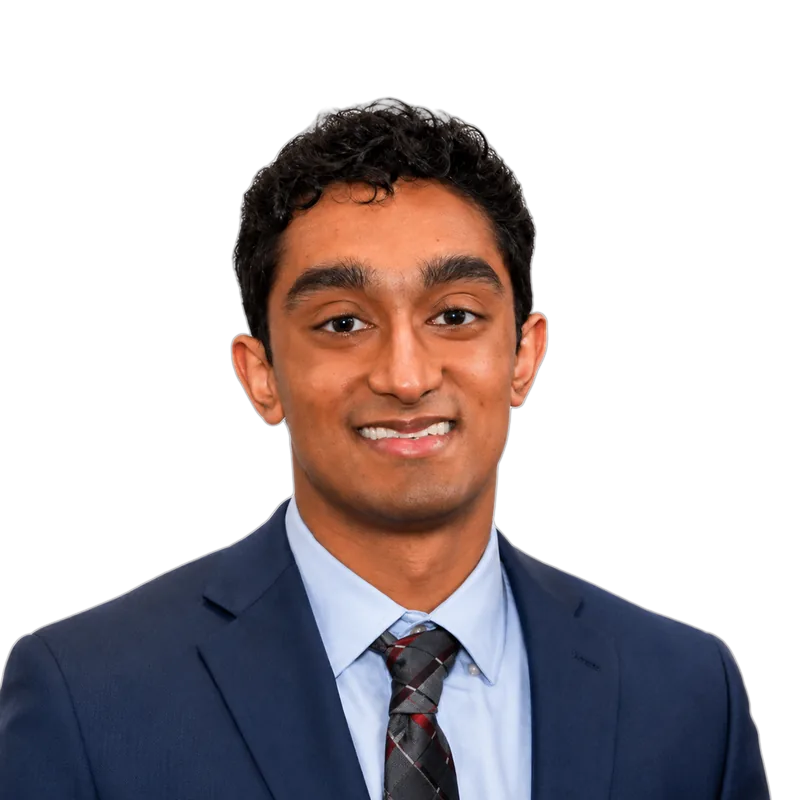
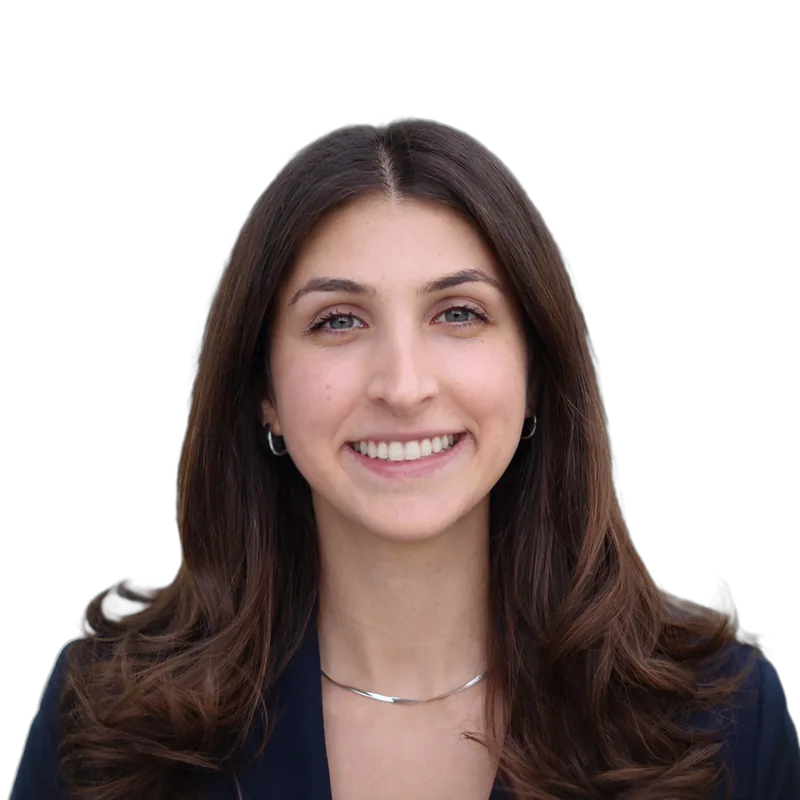
We spoke with three successful applicants about the decisions behind their essays. Dr. Mihir Dekhne is a graduate of the Pathways MD program at Harvard Medical School and now an orthopaedic surgery resident at Hospital for Special Surgery in New York. Sid Subramanian is an MD student at Northwestern Feinberg School of Medicine. Shani Snow is an MD student at UMass Chan Medical School.
Alongside their reflections, we’ll examine their actual medical school personal statement drafts and final submissions to see how their ideas developed, which stories made the cut, what changed between versions, and what each applicant learned along the way. Their experiences offer a rare look at the process behind the finished essay and the often-messy journey that gets you there.
The central lesson is reassuring: there is no single formula for a successful personal statement. These three applicants took different approaches, earned acceptances at highly selective schools, including Harvard, Feinberg, and Wake Forest among others, and still have things they would change in retrospect. You don’t need a flawless essay. You need one that is strong, memorable, and open to improvement.
By examining these applicants’ stories, drafts, and final essays, we’ll explore how they worked toward answering the question of “why medicine?” and what you can learn from their process.
Personal Statement Example 1: Dr. Mihir Dekhne (Harvard Medical School)
Meet Dr. Dekhne
Dr. Mihir Dekhne attended the University of Pennsylvania, where he completed a BA in biochemistry and a submatriculated MS in chemistry. He applied to MD and MD-PhD programs as a traditional applicant, without a gap year. He received seven acceptances from 14 interviews, including Harvard Medical School, where he completed the Pathways MD program. He is now an orthopaedic surgery resident at Hospital for Special Surgery in New York. He has also served on a medical school admissions committee.
Dr. Dekhne’s account is explicitly retrospective. He is also openly critical of his statement now. In his account, he examines the choices he made, what worked, and what he would do differently after years of medical training and experience editing other applicants’ essays.
His central lesson is concise: “The essay is an argument, not a summary.”
Where he started: Trying to make the essay sound impressive
Dr. Dekhne began brainstorming during winter break of his junior year. He listed moments when he had felt drawn toward medicine, including football injuries, rowing, research, and clinical work. He estimates that he had about twenty fragments by the end of one evening.
The problem came next. Instead of choosing the most revealing experience, he tried to fit several of them into one statement. He also assumed that the essay needed to sound impressive. His original statement included a quotation from Nobel laureate Murray Gell-Mann. Looking back, he describes what the reader is actually looking for:
“What I understand now is that the reader is mostly trying to figure out who you'll be with patients and whether you know why you want [to become a doctor]. The essay is often the only place in the file where they get to hear what you think.”
In retrospect, he believes he spent too much time polishing sentences before establishing the essay’s central argument. “I spent the early months polishing sentences in a draft whose structure was wrong,” he explained, “so a lot of that polish got thrown out.”
Dr. Dekhne’s account offers a useful counterpoint to the idea that more editing always produces a stronger statement. Revision can improve wording, but it cannot fully solve a problem of focus:
“[As I edited the personal statement, it] got more polished and less specific, which is the wrong direction. Early drafts had more of the clinic and fewer big statements. Later drafts added quotes and abstractions because they felt more like what a personal statement was supposed to sound like.”
Dr. Dekhne also admits that the draft right before his final submission was the weakest version of his essay:
“The one right before the final [was the worst version of my statement]. It had everything I cared about: football, rowing, the lab, the clinic, and a short EMT paragraph. It read like my activities section with transitions. Every paragraph was fine alone, and none of them needed the others. The final version was better mostly because I cut things, not because I added anything.”
This is an important lesson: more drafts do not necessarily mean a better essay.
Brainstorming: The question that mattered more than “Why medicine?”
Dr. Dekhne considered four main directions: high school football and repeated visits to an orthopedist, rowing, orthopaedic research, and work at a free clinic. He eventually tried to connect these experiences through the idea that many roads lead to medicine.
Looking back, he sees that as a way of avoiding a difficult choice. “Instead of choosing, I used four of them and tied them together with the idea that many roads lead to medicine. Looking back, the roads metaphor was me avoiding a decision,” he said.
The question that helped him identify the strongest material was more specific: When had he seen a physician do something he could not?
That question brought him back to an encounter at the free clinic. While taking a patient’s vitals, Dr. Dekhne noticed that the man’s fingers were thickened and rounded at the tips. He did not know what the finding meant. When he mentioned it to the attending physician, the physician recognized that clubbing can indicate serious underlying disease. The patient was diagnosed with lung cancer not long after.
Dr. Dekhne realized that the scene conveyed something his broader statements about curiosity and altruism could not. He had noticed a detail, but he did not yet have the knowledge to interpret it. The physician did.
As Dr. Dekhne put it, “What I didn’t have was the knowledge of what they meant, or the responsibility for what happened next. That’s the part of medicine I wanted. If I rewrote [my personal statement], that would be the thesis instead of ‘altruism and fascination.’”
“Writing the clinic paragraph made me see that what I wanted was the responsibility. I'd noticed something and handed it off. I wanted to be the person it got handed to. I didn't say that clearly in the essay, but by interview season it was on my prep sheet almost word for word: patients accept your diagnosis, and I wanted that responsibility.”
What made the scene useful was what it revealed about the kind of work he wanted to do.
First drafts and revisions: When a smooth essay still misses its point
Dr. Dekhne’s final statement moved from athletics to research and then to a free-clinic encounter. It was structured and readable, but he now believes that its central argument was spread across too many experiences.
His opening sentence was: “I credit my initial interest in medicine largely to my experiences in athletics.”
He describes it as accurate, but not memorable. In retrospect, he would have opened with a scene instead, such as the patient in the Michigan jacket. He also believes the hydraulic-press research anecdote took up more space than it deserved. It demonstrated scientific curiosity, but the clinic scene showed him interacting with a patient and confronting the limits of his knowledge.
Dr. Dekhne also regrets relying on abstract labels such as “altruism and fascination.” In his view, the essay’s most effective moments were concrete:
“[During interviews, admissions committees] always [brought up] the specific details, never the big ideas. Nobody asked me about ‘altruism and fascination.’ They asked about the patient in the Michigan jacket, the femur in the hydraulic press, and my years as an offensive lineman. That told me what the essay was for. Interviewers remember unique details because most personal statements say the same things. You don't have to reinvent the wheel. You do need your version of the story to be different from the next person's, and the details are what make it different.”
He says that the strongest evidence about his priorities was “buried in one clause”: he gave up rowing when it conflicted with a required lab. Rather than explicitly listing perseverance, teamwork, and dedication, the essay could have spent more time showing a choice that demonstrated his priorities.
Dr. Dekhne’s retrospective analysis is valuable precisely because he does not claim that the submitted essay was flawless. His application was successful, but he can now see ways to make the statement more focused and more personal:
“I also thought it mattered less than my grades and MCAT, so I didn't worry about it much. Rereading it now, I'm glad it worked, and I can see places where it got by on the strength of the rest of the file.”
Draft to final: What changed, and what he would change now
Dr. Dekhne no longer has his original draft, so a true first-draft-versus-final comparison is not possible. He does, however, have his submitted essay and can identify what he would change if he were writing it today.
Dr. Dekhne’s final personal statement
I credit my initial interest in medicine largely to my experiences in athletics. Throughout high school, the abuse my body endured as an offensive lineman made me a fixture at my local orthopedist’s office. To avoid further injury in college, my first two years at the University of Pennsylvania were spent as a walk-on athlete with the rowing program; only when I was not allowed to miss a practice for a chemistry lab did I decide it was time to invest my time and energy elsewhere. Regardless, being a student-athlete taught me a great deal about perseverance, hard work, sacrifice, teamwork, and dedication that was decidedly different from anything I learned in school. Laced into moments of excruciating pain on the water and fear of failure on the field were instants of utter clarity that transcended the corporeal suffering and shone light onto the path of medicine.
Looking back, I realize now that while all physicians inevitably have the same goal of improving health and wellbeing, many unique roads lead to the path of medicine. For me, this path has been a combination of altruism and fascination. I believe that the pursuit of medicine demands a respect for the responsibility of healing as well as an awe of the most flawless, systematic, and complex machine ever devised – our body. But, as Nobel laureate Murray Gell-Mann once said of his work in elementary particles, “surface complexity aris[es] out of deep simplicity.” We are amidst an exciting era in which insightful discoveries in bench research and clinical treatments alike are growing each day – the pursuit of medicine and the capacity of physicians to save lives is boundless; like no other discipline, the ‘youngest science’ captures my intellectual ideals, altruistic morals, and humanistic values.
The pursuit of medicine was not always clear to me, however. Throughout my high school career and early undergraduate career, I struggled to connect the intellectual fulfillment of my scientific coursework to applicable knowledge. It was not until I began translational research in an orthopedic surgery lab at the University of Pennsylvania that I was able to realize the power of medicine. I remember eagerly entering the lab one day to find the hydraulic press slowly crushing a human femur. As I watched the bone fracture under the enormous pressure, I thought to myself that the ability to simulate elderly hip fractures in a hydraulic press is nothing short of remarkable. In this way, research has allowed me to channel my intellectual curiosity and awe towards medical advancement. At the crossroads of intellectual wonder and applied science, research provides the skills to critique current knowledge, assimilate new information, and incorporate it into a diagnostic repertoire – all of which excite me and reassure me that medicine is truly a skill that is 'practiced' for the duration of one’s career.
Yet, what excites me even more about medicine is the ability to positively and directly affect individuals and their families. I discovered this firsthand during my time as a clinical volunteer at Ferncare Free Clinic in Ferndale, Michigan. During my time, I had the opportunity to interact with uninsured patients of a variety of ages and backgrounds as I collected basic health information and assisted physicians with examinations and treatment. One of my patients was an elderly man whose wizened face and hunched back told a tale of suffering. As he wheezed with each breath, I noticed his Michigan jacket and struck up a conversation about the Wolverines’ upcoming football season. His tired expression immediately lit up and he seemed grateful to escape the monotony of the appointment.
As I continued with the intake and collected vitals, I noted some distal finger thickening and nail rounding, but did not think much of it. After the exam concluded, I mentioned these findings to the attending physician in passing, who immediately explained that ‘clubbing’ could be indicative of any number of heart and lung diseases. In fact, the man was diagnosed with lung cancer not long after our first encounter.
While seemingly a trivial anecdote, I found this brief instance an incredible recapitulation of the allure of pursuing a career in medicine. Aside from the intellectual engagement and fascination, I believe that physicians and health care providers play a far more important role in effecting positive change in the lives of patients and their families. In the old man’s time of suffering, rather than simply checking the boxes, I invited myself to experience his vulnerability – to be so intimately involved in the process of healing and to be fully trusted is both a humbling responsibility and a privilege.
In addition, to experience health and wellness is to also experience death and sickness. Seeing the prognosis of lung cancer provided me with a sobering glimpse at mortality and the fragility of life. Having such awareness, I believe, has given me an even greater respect for the pursuit of medicine.
In the end, while the roads that lead to a career in healthcare may be diverse, they are surely converging. And regardless of the path one takes to arrive at medicine, I believe that the pursuit of medicine toward improving human health is an unchanged, universal truth.
| Submitted approach | Dr. Dekhne’s retrospective assessment | What he would change |
|---|---|---|
| The essay opens with a general statement about athletics. | It is accurate but not especially engaging. | Begin with a specific scene, likely the clinic patient. |
| Several experiences are linked by the idea that many roads lead to medicine. | The essay reads smoothly, but the experiences do not build on one another strongly enough. | Choose one central moment and include only the context needed to understand it. |
| Research receives a vivid scene involving a hydraulic press and a femur. | The scene shows fascination, but it is less revealing of the applicant’s future role with patients. | Give the clinic encounter more space and reduce the research anecdote. |
| The essay explicitly names qualities such as perseverance and teamwork. | Dr. Dekhne believes the list does not prove the qualities. | Show a consequential choice, such as leaving rowing when it conflicted with a required lab. |
| The conclusion returns to the abstract metaphor of roads converging. | The essay circles back to an idea rather than a memorable scene. | Return to a concrete image or patient encounter. |
Dr. Dekhne: Takeaways
Dr. Dekhne’s advice is to identify the one moment he would keep if he could keep only one, start there, and then add only the context the reader needs:
“For a first draft today, pick the one moment you'd keep if you could only keep one, and start there. Write it badly and long. Then ask what the reader needs to know before that moment makes sense, and write only that. Don't quote anyone famous. Don't tell the reader what you learned if the story already shows it. And read it out loud before you show anyone, because you'll hear the sentences that are trying too hard before anyone else has to.”
He also gives actionable advice on how to tell a story of growth without using common tropes like “I learned” or “I realized”:
Mostly I didn't manage to show personal growth without explicitly saying “I grew from this experience” - my essay says "I realized" more than once. The one place it works is the clinic story. I don't say I grew. I say I saw the man's fingers and didn't think much of it, and the physician did. The reader can see the gap between us, and wanting to close that gap is the growth. When I edit essays now, I look for "I learned that" and ask the writer to cut it and see whether the story still makes the point. It usually does.
To help with writing an authentic narrative, Dr. Dekhne also shares his bit of wisdom:
“I borrowed one exercise from my training as a writing center tutor. Tell the story out loud to someone, then write down what you actually said. When I tutored, students almost always explained their ideas better out loud than on the page. That turned out to be true for me too. My free clinic story came out more naturally when I told it to my brother than in any version I'd typed.”
Personal Statement Example 2: Sid Subramanian (Northwestern Feinberg)
Meet Sid
Sid completed his undergrad at Wake Forest University with a full-ride merit scholarship, double-majoring in Biochemistry and Molecular Biology and Spanish. He took one gap year before applying to US MD programs. He ultimately received six acceptances from 13 interview invitations, including Vanderbilt, UT Southwestern, Northwestern Feinberg, Boston University, Wake Forest, and East Carolina University, eventually choosing to attend Feinberg School of Medicine to complete his four-year MD program.
His application had strong academic credentials, but Sid did not believe he had any unusual or extraordinary experiences that could make his personal statement stand out. He had a clearer priority: explain the throughline connecting his experiences and show why medicine was the right way to pursue his interest in health equity.
As he put it, “The goal of my personal statement was not to present me as some incredibly unique individual.” Instead, he wanted to show how his interest in health equity had led him toward medicine and how his clinical experiences helped him understand why becoming a physician, not simply working in healthcare, was the path he wanted to take.
Where he started: A timeline of formative experiences
Sid began seriously working on his statement in mid-February of his senior year, later than he would recommend in retrospect. He started by reading about personal statements and drawing a timeline of formative moments, using his résumé to jog his memory. He worked backward from his college experiences to earlier memories, including visiting his younger brother in the neonatal intensive care unit (NICU).
He then added high school shadowing and volunteering, along with later clinical and service experiences. The timeline helped him see how his understanding of medicine had changed over time.
Sid estimates that he spent 60–70 hours on the personal statement - roughly two to three times as long as he spent on his Work and Activities descriptions. He completed around ten drafts over approximately two and a half months. Much of the work happened in weekend bursts, with ideas added to his document during the week.
Looking back, he would have started brainstorming during winter break and aimed to have a first draft by mid-February. He advises applicants to leave room for feedback and multiple rounds of revision, as well as for writing. As he explained, “It takes a significant amount of revision to go from your first personal statement (which is going to be bad) to your final version.”
Brainstorming: Finding the story beneath the résumé
Sid had a number of experiences he could have written about: his brother’s NICU stay, his own orthopedic injury, high school hospital volunteering and shadowing, medical interpreting, studying abroad in Spain, a summer in Tanzania, service at a food pantry, and work with a free clinic. He had plenty of impressive experiences on his CV. The challenge was finding which activities best explained his motivation for medicine.
He ultimately focused on patient interactions, especially experiences that helped him understand health inequities and the role of language in access to care. As his personal statement started to take shape, he had some difficult decisions to make: his research in plant ecology was meaningful to him, but it did not support the narrative he wanted to tell. Rather than inserting it simply because research is often valued in medical school admissions, he saved it for another part of his application.
Sid also chose not to include every personal experience that mattered to him. He also left out his mother’s illness and his experience navigating healthcare in Spain. Both mattered to him, but neither fit the narrative of his statement as well. He recognized that other application components, such as Work and Activities and secondaries, as well as interviews, could provide space for those stories.
This is one of the clearest lessons from his process: an experience can matter deeply to you without necessarily belonging in the personal statement. Prioritize the cohesiveness of your narrative rather than listing all of your impressive experiences.
The question behind his “why medicine”
Sid’s turning point came through his work as a medical Spanish interpreter. During a 100-hour hospital internship, he interpreted during consultations with hematology-oncology and other specialties. Those interactions helped him appreciate the physician’s role within a healthcare team and recognize the limits of his own role as an interpreter.
He began asking a more precise question: “The central question was, why a physician over a medical interpreter? What does a physician do that a medical interpreter cannot? That helped develop my reflective component, which took many drafts to work through.”
As he explained, interpreters could form connections with patients and families, but their role was different from the physician’s. Sid wanted to do more than help communicate information. He wanted the knowledge and responsibility to participate in clinical decision-making and direct care: “Ultimately, gaining that medical knowledge to better understand health would allow me to make a much larger impact on reducing health inequities and fit in better with my broader purpose.”
That distinction gave his statement a central argument. His earlier experiences had introduced him to medicine; his work with patients helped him articulate why he wanted to become a physician specifically.
First drafts and revisions: From formative memories to a connected narrative
Sid’s first draft looked substantially different from the version he submitted. In his first essay, he did not include many of the experiences that eventually became central to the final essay. In the second draft, he introduced his younger brother and added details from middle and high school:
“Cutting down anecdotes was tough, but over my revisions, I valued writing about experiences over time instead of fixating on one specific anecdote. So, instead of spending a lot of time talking about the hospital patient, I left room for details about middle and high school. I also cut down on details about my little brother having ASD, as that encounter was not as relevant to my story for health equity, as my experiences had been with Spanish-speaking patients and not neurodivergent ones. One anecdote I cut was from my time in Tanzania. I included a whole paragraph on an individual I met in Tanzania who did not get medical care at the right time and had to have his leg amputated due to a treatable infection. Although the encounter was impactful to me and got me interested in global health and helped me reflect on healthcare in the US vs. other countries, it did not fit in with my narrative. My theme was addressing local, community-focused health inequities, not global health, and I had no relevant global health experience. I realized over the revisions that the Tanzania experience detracted from my story, and I saved the anecdote for secondaries.”
The final version opens with a patient encounter: Juan, an immigrant from Mexico who was seriously ill with leukemia. Sid describes interpreting for Juan and his family, watching the physician communicate with empathy, and seeing Juan consent to a possible clinical trial. The scene allows Sid to show the emotional weight of the encounter before reflecting on what his role as an interpreter could and could not offer.
He then moves back to an early memory of his brother in the NICU, followed by his own orthopedic injury and the care he received from a surgeon. These experiences establish that his interest in medicine predated his work in community health. The essay then turns to his service with uninsured patients and his growing interest in health inequity.
The final narrative moves between personal history and patient-facing experiences, but its focus remains consistent: the relationship between access to care, communication, and the physician’s responsibility.
Sid also had to overcome writer’s block around the introduction and conclusion. He found it difficult to make the opening work as a flash-forward and to end with a concrete sense of his future mission. Feedback from two medical-student friends helped him get unstuck. He recommends sharing a draft once it is coherent enough for reviewers to assess, even if it is not yet the version you hope to submit:
“The feedback that fundamentally changed my essay was to prioritize reflection and that I had not included enough takeaways from my experience. My friends actually gave me this feedback when looking through my first few drafts. I just layered anecdote after anecdote and simply said I wanted to do more, or that my encounter was profoundly impactful without actually delving into my thoughts at the time and my key realizations. My essay had strong anecdotes from me being an interpreter but did not tie back into why medicine was the path for me, so in my reflection, I had to include details about what a physician does, why I was unable to do those things, and what doing those things would mean to me.
The reflective component by far [was the most difficult part of writing the personal statement]. It was easy to come up with anecdotes and replace them as I saw fit, but actually writing 3-5 sentences on what I took away from the experience without sounding generic was tough. I also had to have different reflections after each anecdote and not repeat myself or cite overused tropes, such as I want to help people, or that I wanted to solve medical puzzles. Even looking back now, I think I could have probably dug a bit deeper with the reflection, but it takes time. In fact, it took me two weeks of work after getting the feedback to improve my reflection to come up with another revision.”
Draft to final: What changed?
Sid’s first draft
He winced in pain, grasping at the side railing of the hospital bed through a tangle of wires and tubes. As “Juan” turned his body towards us, I could see his face stained so profoundly by tears as if his eyes could allow no more. He managed to smile as we entered the room to discuss a treatment plan, and we needed him to keep fighting and stay resilient as he had been through one of the bleakest moments imaginable. Looking to the side, I noticed his sister, however, who was overcome with emotion, crying as she spoke to Juan’s children on the phone who were anxiously awaiting updates. As a medical Spanish interpreter, I was stepping into a situation far more overwhelming than ever before. There was no room for error. Every word mattered. My heart began pounding as I gripped my pen and notepad with sweaty palms and got to work.
It was my responsibility to make sure Juan, despite being in an unfamiliar place faced with a language he did not know, could feel supported and cared for in his most trying times. The provider’s words were nothing short of inspirational, and I was amazed by the grace and gravity in her voice. She was a beacon of hope, and to make it out of the hospital one day and back in the arms of his wife and children at home, he needed to trust her, especially now. The frustration and anguish on his face was evident, and the news to be delivered would by no means make it disappear. Cancer, although tough to bear, was nothing new for Juan, as he had suffered from myelodysplastic syndrome (MDS) for years. It was less aggressive and managed with chemotherapy. But within the span of one week, his health had taken a drastic turn for the worse, and he barely managed meals as a PICC line fed him a new cocktail of drugs of ever-increasing strength. I explained to him that he needed a bone marrow transplant, and that his MDS had progressed to the more severe acute myeloid leukemia (AML).
The provider had a promising solution, delicately balancing optimism and reservation. I saw a glimmer of hope in his eyes, and relief swept across his sister’s face. I discussed a novel clinical trial, a breakthrough drug combination delivered in a fat bubble, that could deal a heavy blow to his AML. He gazed at me, then back at the provider who had her hand on his shoulder, agreeing to participate. He had a new chance at life, and his thankfulness was touching. Although being an interpreter helped me bridge the barrier between patients like Juan and his provider, I yearned to be more involved in the decision-making process. I was speaking for someone else, allowing me to observe how physicians navigated difficult encounters with patients, yet I desired a deeper connection with Juan and his family, who similarly to mine, had moved to a foreign land in search of new opportunity.
Unfortunately, patients like Juan faced poor healthcare outcomes, yet such disparities were rarely so prevalent and conspicuous as they were in my hometown. In fact, a single highway sliced between vibrant parks and towering homes in the west and abandoned neighborhoods and food deserts in the east. The results were devastating for the populations I served. No reliable permanent pharmacy, a persistent struggle to attend specialist consultations, fears and confusion regarding medication, and endless wait times. One patient, “Lucia” expressed her frustration with the documentation and hurdles to overcome as I helped register her for a mammography clinic on the phone. At each step, I guided her through various options, ensuring she felt supported and had a clear path to the services she needed. As the minutes passed, the uneasiness in her voice settled, and her joy became palpable. Moments like these gave me insight into not only the countless battles she and others had to fight daily, but also how medicine could change the lives of people who needed it the most.
Healthcare inaccessibility, however, stretched far beyond my city, and having had the privilege to do research in Tanzania, I was no stranger to this gruesome reality. With acute trauma care over four hours away, and neither ambulances nor insurance, medicine was hard to come by and devastating stories were all too common. My neighbor, “Musa” was forced to amputate his leg due to a treatable infection, yet still managed to get up and down a steep, muddy hill to his shop. Nobody knew the cause until it was too late. Regardless, his humility and gratitude for the care he could receive left me longing for a way to give him the life he deserved. He treated me like his grandson, and was fascinated with America, asking why we refrigerate our milk, use dryers, and love fast food so much. In helping him shop for groceries and run errands, I was happy to alleviate some of his burdens, but it hurt me that with medicine, his suffering would have been avoidable. In Tanzania, medical care was by no means a guarantee, yet I was surprised by the uplifting spirit and positivity of those I met, which still resonates with me today. Difficult as it was to say goodbye, I knew then more than ever that my future profession needed to be centered on people and bringing them the promise of a better life as a physician.
Sid’s final personal statement
He winced in pain, clenching the side railing of the hospital bed through a tangle of wires and tubes. “Juan,” an immigrant from Mexico, was battling leukemia, and his condition was deteriorating. Looking to the side, I noticed his sister. Her eyes were filled with tears as she spoke to Juan’s children on the phone. My heart started pounding as I gripped my pen and notepad with sweaty palms. It was my first time interpreting for someone in critical condition.
My anxiety quickly faded, and throughout the conversation, I was amazed by how his physician balanced a serious tone with a sense of grace and empathy that inspired hope. By interpreting her words to Juan, I helped him trust his physician. When the possibility of a clinical trial arose, Juan consented, nodding his head in relief. I will never forget how touching it was to see smiles on Juan and his sister’s faces for the first time since the ordeal began. I was excited that he now had a chance to be back home. As an interpreter, I helped facilitate care for people like Juan, but I was completely removed from the decision-making process. I had to avoid being alone with patients in the hospital so they would not ask me questions, and I never got to see them again after they left. I instead desired to connect more deeply with Juan in his language and to have answers for him. I did not want to be a voice for someone else. His family, like my own, had come to America for the promise of a better life, and I wanted to fulfill that promise by directing his care.
I knew how life-changing medicine could be long before I met Juan. In fact, what first captivated me about the field was how it saved my baby brother, Krish. One of my earliest memories in a hospital was visiting him in the NICU after he was born 10 weeks prematurely. When his physician came by, I remember him calming us with his comforting words, assuring my mother and me without hesitation that Krish was going to be safe. I felt a huge weight come off my shoulders, but I wondered how he could be so certain. Only 11 at the time, I had no clue what any of the machines that Krish was hooked up to did, but I grew excited by the idea of sharing good news. I pictured myself telling other families that their loved one too would make it back home.
An unexpected experience of my own a few years later furthered my fascination with medicine and the intimate role physicians had in care. One moment, I was on my feet playing soccer, and the next, I was in tears lying on the field after a rough tackle. I glanced down to see my right leg in a mangled mess and almost passed out before being whisked away in an ambulance. The whole morning was filled with fear and regret, but bonding with my orthopedic surgeon that afternoon brought back my confidence despite the agonizing pain I felt. He answered my questions and later guided me through months of recovery. Looking back, I admired how he stayed by my side. I started to feel a greater pull towards medicine and wanted to uplift people, as he had, during vulnerable moments and also see them get better.
Later on in college, I found my passion for becoming a physician by working with uninsured patients. Having seen the impact that quality care had on my family, I felt motivated to improve health outcomes for those less fortunate. My interest in health inequities began during my first few weeks on campus. Curious to learn more about my hometown, I attended seminars on local disparities. I was startled by how many people just a few miles away found it difficult to get the care they needed. I sought to be a part of the solution, but first, I wanted to hear these patients’ stories and understand the challenges they were facing.
That opportunity came in the spring when I saw an email from a small clinic in town that needed volunteers. I decided to lend a hand, and on my first day, the nurse asked if anyone spoke Spanish. Knowing some at the time, I nodded and talked with “Ana” on the phone, who was pregnant and had run out of her diabetes medication weeks ago. I told her excitedly that we were open, and once Ana arrived, she said that if it was not for us, there would have been nowhere else for her to go. The uneasiness I heard in her voice earlier had turned into joy now that she and her baby would be safe. Even though I played a small part, it warmed my heart to see the difference that receiving medical care had on her life. Searching for that feeling, I turned to interpreting in order to welcome and support patients like her. I realized that I wanted to empower them through any adversity and help them be more in control of their bodies. There is nothing more gratifying to me than seeing people enjoy the gift of a good life. Devoting myself to medicine will let me transform the health and well-being of others to ensure that they can be there for their families and their communities.
Engaging with the underserved and underprivileged connected the dots for me and helped me discover my true calling. Through my platform as a physician, my vision is to one day lead clinics that provide a lifeline for patients and raise awareness for disease prevention in lower-income areas. By working alongside my colleagues, I hope to bring us closer to reducing health inequities.
| Early approach & challenges | Final approach | What changed, according to Sid |
|---|---|---|
| His first draft did not yet include several formative experiences that later became important. | The final essay connects his brother’s NICU stay, his own injury, and patient-facing work. | He added personal and earlier-life context across subsequent drafts. |
| He had to clarify what made medicine distinct from interpreting. | The Juan encounter shows both the value and limits of his interpreter role. | He asked why he wanted to become a physician rather than remain an interpreter. |
| He had many potentially relevant experiences. | The final narrative prioritizes health equity, language access, and patient interactions. | He left out experiences that did not fit the central story. |
| He struggled to write a conclusion that conveyed a career mission. | The final paragraph articulates a goal of leading clinics and reducing health inequities. | He used feedback to develop the reflective parts of the essay. |
Sid: Takeaways
Sid’s experience reinforces the importance of starting early, developing a clear throughline, and using the personal statement to build on, and not simply repeat, the Work and Activities section. He also learned that reflection works best when attached to an experience in which you have a meaningful role and that writing your personal statement can really clarify why you truly want to become a doctor:
“I had the chance to reflect on my mission for health equity as well as look back on the experiences I had in middle and high school. I always had a passion for serving the underserved, but in writing the personal statement, I realized just how far I had come and how much more I wanted to do throughout my medical career.”
But his personal statement does not come without regrets:
“I wish I had known just how important reflection is in the personal statement. Looking back, I wish I had had a journal throughout my clinical experiences and focused less on specific anecdotes and more on how I felt and what I was learning from the experience. Some key pieces of advice I would give are: (1) avoid overly-dramatic language as you are not writing a fictional novel and rather telling your own story (2) focus heavily on your personal growth in the personal statement instead of just listing experiences, as you want to have a few takeaways from each anecdote on what being a physician means and the impact medicine has, and (3) develop one clear mission consistent with your Work and Activities and application – do not try to be a health equity promoting clinician scientist advocate – pick one clear focus and identify the experiences that helped you find that purpose and conclude with a mission statement for what you hope to achieve in that field.”
His advice is to write a first draft before seeking extensive feedback, then ask for help from people who understand you personally and people who understand medical admissions. Their perspectives can be different, and both can be useful. At the end, Sid believes his personal statement served the important role of getting him noticed:
“My personal statement definitely captured my focus on health equity and passion for community service well. I got several interviews from service-focused schools and had many interviews touch on medical interpreting and some meaningful encounters from that experience. It was an easy read, had some nice moments, and ended with a concrete theme of health equity that was all throughout my application, from the Work and Activities to the secondary essays.
I never actually got a compliment on my personal statement, but I had two interviewers say they looked at my personal statement and saw I did a lot of medical interpreting and wanted to hear more about it or about what got me interested in Spanish. It was more a springboard for conversation, and I’m sure they had read many personal statements similar to mine. I had no incredibly unique life experiences or X-factors, [such as] a second career, high-level sports accomplishment or research award, and at the end of the day, a personal statement is only as good as the experiences you have.”
Personal Statement Example 3: Shani Snow (UMass Chan)
Meet Shani
Shani studied Molecular and Cellular Biology at Johns Hopkins University and minored in Spanish for the Professions. She applied directly from college to MD programs, without a gap year. She received two acceptances, from UMass Chan Medical School and Florida International University, and was waitlisted at three other schools, eventually attending UMass Chan Medical School.
In addition to answering “why medicine?”, one question Shani identified as guiding her essay was: “From the perspective of being a patient, what qualities would I want my doctor to have?” It is a useful prompt because it asks applicants to reverse their perspective and consider what they would hope to experience as patients. For Shani, that question connects naturally to her focus on language, communication, and helping people feel heard. Her experience immigrating to the United States and moving throughout childhood helped shape those interests, while her clinical, service, and research experiences gave her opportunities to explore them in practice.
Her challenge was to show how her background and experiences shaped the kind of physician she hoped to become.
Where she started: Six months to reflect and revise
Shani began thinking seriously about her personal statement during winter break, approximately six months before AMCAS opened. She made lists of college experiences, the reasons she pursued them, and the interactions that had stayed with her. She then worked backward through earlier memories to identify the experiences that shaped her values.
She estimates that she spent about 30% of her application-writing time on the personal statement. She worked in bursts at first, becoming more consistent in the month before submission. The six-month timeline gave her space to pause between drafts, reflect, and wait for feedback.
Shani also found the process personally affirming:
“My advice for someone looking to start is that you should take a second to acknowledge that you are about to start on the long journey that is the process of applying to medical school. Writing my personal statement reminded me why I wanted to pursue medicine and made me excited for what was ahead. Before you start, take a second to commend yourself on the hard work you have done so far!”
Brainstorming: Choosing meaningful experiences over interesting ones
Shani initially had several possible directions for the essay. She considered a high school hospital-volunteering story and an opening about discovering her love of languages. She also wanted to discuss clinical work, research, and community service.
Rather than force herself to choose immediately, she followed a mentor’s advice:
“When brainstorming, I had several ideas for things to write about. As I talked through all of them with my mentor, she suggested that I try to write 3 or 4 different versions of personal statements based on all of my different ideas. After writing out those different versions, one stood out more than the others.”
The strongest material connected her clinical experiences with her values around language and communication. She wanted to show how her background shaped the way she connected with others, including Spanish-speaking patients, and how those experiences informed her understanding of patient-centered care.
A particularly meaningful nonclinical experience involved tutoring an underserved child and working closely with the child’s family over Zoom during the pandemic. Shani valued the relationship she formed with the family. She connected that experience to her own experience as an immigrant and to the importance of making people feel understood.
The tutoring gave her a way to demonstrate the personal values she hoped to bring to medicine. In her own words:
“The experiences that were the most useful for my personal statement were not the most interesting ones, but rather the ones that were the most meaningful in terms of shaping my values. I looked at my experiences and thought about how to write about them in a way that showed my passion towards communication and helping people feel heard. I then created a story that ultimately blended my experiences together and had a general sequence of events. I tried to focus less on listing out my whole resume, instead focusing on sharing stories that demonstrated who I am as a person and my values that I would take with me going into medical school.”
Finding the opening: A patient encounter that connected to her own life
Shani wrote several versions of her opening before settling on a scene involving a patient she was shadowing. The final opening she shared begins:
“I could almost feel the tension in his back as he regarded his unfamiliar surroundings. Our patient maintained the strained posture I still recognize in my parents in moments where Hebrew serves only as background music, muffling our understanding of English.”
The scene connects an observation about a patient’s body language with Shani’s memory of her own parents navigating an unfamiliar language. Rather than announcing that she is empathetic, the opening shows what she notices and why the moment resonates with her.
From there, Shani moves back in time and then into her college experiences. She deliberately linked the different stories through the themes of language, communication, and helping people feel more comfortable.
Her approach also helped her distinguish “why medicine” from a broader interest in science or helping others. She wanted to show what she had observed while working with physicians and how that experience inspired her to take on the physician’s role:
“While I acknowledged my interest in science and helping people, I wanted to demonstrate that medicine is something that goes beyond that, and through my experiences, showed that it involves advocating for your patients, asking questions and investigating ways to improve the patient experience and advance medicine, and teaching and inspiring others.”
First drafts and revisions: Learning what to cut
Shani went through approximately eight versions of her statement. She drafted freely at first, then revised the content before focusing on grammar. Her first draft was about two pages; the final version was approximately a page and a half.
One of the most consequential pieces of feedback came from a mentor who advised her to focus more directly on the experiences that explained why she wanted to pursue medicine. Before that conversation, Shani had spent considerable time considering stories about moving around during childhood. Those experiences mattered, but they did not by themselves communicate a clear motivation for medicine.
She changed the structure: instead of beginning with childhood, she opened with a patient encounter and then moved back in time to provide context – which is an approach we have already seen in Sid’s personal statement. Shani shortened the childhood material and gave more space to college experiences that connected to her central theme.
She also had to decide which feedback not to follow. One mentor suggested emphasizing shadowing more heavily, but Shani kept her community-service experience because it was personally meaningful and fit the story she wanted to tell. She also navigated conflicting feedback from her family:
“I received conflicting feedback from my family, who thought that mentioning more about my childhood could paint a better picture of who I am, and my mentor, who stated that while I should mention some things about when I was younger, it’d be better to spend the bulk of the essay focusing on my motivations to pursue medicine and my college experiences. I ultimately shortened the parts about my childhood and wrote more about my college experiences because those anecdotes ended up being longer and could be connected to who I am as well as the main theme of my essay.”
Her process illustrates that feedback is not a set of instructions to follow mechanically. Reviewers can help you see weaknesses or alternatives, but you still need to decide which version represents your experience and motivation most accurately.
Shani read the statement aloud repeatedly and asked whether each sentence either revealed a story or communicated a meaningful reflection. If a sentence was wordy or did not have a clear purpose, she revised or removed it. She also took breaks of several days, and sometimes weeks, between drafts.
Draft to final: What changed?
Shani shared her first two drafts and her final statement.
Shani’s first draft: moving, Spanish, and connecting with others
I’m looking out the window and crying in the car. My brother sees the tears flowing from my eyes, and joins in. Being only a baby, he definitely did not know anything that was going on, but felt my despair. This crying session lasted for what seemed like the entire car ride from Long Island, New York all the way to Louisville, Kentucky. Little did we know, we’d be experiencing the same tears twice more, until ultimately moving to Chicago.
I’ve moved a total of five times throughout my life, starting with my family’s immigration from Israel to the United States. While each move brought new challenges and exposure to entirely different populations, one thing stayed consistent: my unwavering curiosity about others. When we first got to the US, we lived with my aunt for a few months in New York City. Three-year old me was shocked at the massive collection of unfamiliar faces, eager to say hi to everyone my mother and I passed by in the stroller. My parents take pride in my determination to learn English, and said it took me not long to be able to communicate with the other children in preschool.
Before we knew it, my mother finished her residency in Long Island, my brother was born, and we moved to Indiana so she could pursue a fellowship in Louisville. We went from a huge city to a very rural and Southern town in Indiana. I was very upset to leave my friends from preschool, but made new friends in Indiana, burying my face in books all throughout my first few years of elementary school.
Just as I had begun feeling comfortable, it hit again: my mother got a job in a private practice in Naperville, Illinois. We found ourselves packing up the car again and driving all the way to an extremely cookie-cutter suburban neighborhood. Made new friends, felt comfortable, but my parents wanted one more change, and finally, we ended up north of Chicago in a suburb called Deerfield.
While every move was extremely hard and I had to learn how to make new friends every time, I never felt scared, but rather sad that I was leaving the relationships I had made. It is so important for me to explore and learn about others, because my entire childhood has proven to me how much everyone comes from a different background and how we all must make adjustments in our lives.
With each new adjustment in my life came not only a completely new city to explore, but also new people to learn about. I became curious about where everyone came from and how they became the people they were today. I realized the importance of language and communication not only between people but also between communities. The Hebrew that was spoken in my household not only reminded me of where we came from but also reminded me how different every other household could be.
Upon moving to Deerfield, I was informed I had to register for a language class, as all of the other students had been learning Spanish since earlier in elementary school. I registered for Spanish, and my parents arranged for a teacher to tutor me so that I could catch up in the class. I immediately fell in love. The way the sounds flowed together made me want to practice speaking all the time. I quickly advanced throughout middle and high school, and was awarded a Seal of Biliteracy at the end of high school as an indication of my fluency.
Throughout high school, I was also discovering my passion for medicine. I volunteered at a hospital in my community, and came across many patients and visitors that only spoke Spanish. I jumped at any opportunity to practice, and found that my eagerness only increased with each person I could communicate with and help. It baffled me to think about how if there was no one there who could speak their language, they would not be able to express their needs, and potentially risk misunderstandings to the point where their treatment would be impacted.
I am minoring in Spanish in college and have taken Medical Spanish in order to improve my professional Spanish so that it can be used in a clinical setting. I always knew I wanted to use those skills to help those patients who prefer to communicate in Spanish, and that became even more apparent when I shadowed sleep physicians in a clinic. One physician I was shadowing was fluent in Spanish, and I had the opportunity of watching her communicate with a patient who preferred Spanish. To be able to see the joy in the patient’s eyes after watching his needs be met gave me chills. It scares me that due to miscommunications with physicians, patients can accidentally take the wrong doses of medications and be treated incorrectly. I want to make sure every patient feels comfortable and heard, regardless of whether or not they can speak English.
Medicine perfectly ties together my love for science with my need to learn about others and their backgrounds. I want to take everything that I’ve learned about understanding others as well as language and apply it to taking care of patients. Medicine is so much more than just a diagnosis and a cure: it involves understanding and empathizing with the patient, accounting for their background, and offering the treatment strategy that makes the most sense for them. Whether it be urban, suburban, or rural, all of us are human and all of us feel more comfortable when we can connect with others. It’s my goal to make sure that no one feels alone or as though their needs aren’t met.
Shani’s second draft: more focused on language
I’m sitting in a clinic shadowing a sleep physician, and she’s giving me background information about the next patient. “He only speaks Spanish, so I’m going to have to conduct the session in Spanish.” My heart skipped a beat. This was the moment I had been waiting for: the perfect application of my love for learning languages and medicine itself.
We call the patient in, and he enters the room with his daughter who acts as his translator. The physician was able to directly communicate with the patient, and address all of his needs. Seeing the smile on his face once he was able to clearly communicate his condition was extremely fulfilling even though I was just watching the interaction rather than being a part of it. That was all I wanted: to be able to see a patient at ease knowing they were able to properly communicate with their physician in the language they were more comfortable in.
I attribute my attraction towards communicating with others and learning new languages to my family’s immigration from Israel to the United States. I learned English as a second language at the age of 3 years old. My parents never fail to remind me that I was always beyond enthusiastic to meet new people and practice my English skills with just about anyone and everyone.
When we originally moved to the States, we lived in New York City and Long Island, and then eventually moved to Louisville, Kentucky. I had to transition from a massive city with never-ending faces to an extremely rural town. We then eventually moved around the Chicagoland area, ultimately ending up in a town north of Chicago.
Upon moving to this town in the seventh grade, most of the students had been learning Spanish since elementary school. I registered for the class and my parents got me a tutor. The language clicked – I loved speaking and wanted to practice as much as I could. From that point on, my passion grew, and I continued to learn all through high school. I am now minoring in Spanish in college and have had the opportunity of taking Medical Spanish. This class allowed me to refine my professional Spanish so that I could have the opportunity of utilizing it in a clinical setting.
I want to take everything that I’ve learned living in a wide range of cities and towns as well as my language skills and connect them together in a medical setting to help others. I believe it is necessary for every patient to feel as though their needs are being met, especially when they prefer a language other than English.
Throughout my adolescence, I always enjoyed babysitting my neighbors’ children and playing with them. In high school, I was heavily involved in the tutoring center, and found it exciting to be able to mentor and teach students in different academic subjects. In college, I found the perfect way to combine the two by volunteering with an organization called Pandemic Professors. This organization focused on providing tutoring help to students in low-income families all over the United States. Through that organization, I tutored a young boy named Dario and his family. Dario attended a bilingual school in California all the way across the United States, and we met twice a week over Zoom to help him complete all of his schoolwork. This was the perfect combination of all of my passions: I could utilize my love for Spanish, teaching and mentoring others, and spending time with children.
I quickly became very close to his family. The time that I spent with Dario turned into something much more than just tutoring- it was also a moment for us in the day to have a little bit of fun and distract ourselves from the devastating pandemic and any personal things going on in our lives. Dario always showed up with a smile on his face and was eager to learn, regardless of anything that was going on in his family. I also felt the need to provide him with that outlet, especially because his father was deported to Mexico for a few months.
My experiences with the families I met through Pandemic Professors allowed me to solidify my passions and made me realize my potential as a physician. By communicating with his family in English and Spanish, I was able to ensure that all of their needs were met and that Dario was succeeding in school. It was so much fun to be able to bond with children as well, and seeing that they were having fun as a result of my efforts fueled my passion even more. My proficiency in Spanish once again allowed me to ensure that a child and his family were able to feel heard and comfortable. I hope that I can contribute to more smiling faces in the future.
Shani’s final personal statement
I could almost feel the tension in his back as he regarded his unfamiliar surroundings. Our patient maintained the strained posture I still recognize in my parents in moments where Hebrew serves only as background music, muffling our understanding of English. His daughter shuffled seemingly endless papers. I noticed her body tense, a mirror of her father’s, as she prepared to be the translator for his visit.
The physician I was shadowing pulled me aside. “This patient only speaks Spanish, so I’ll be communicating with him in his language.” The apparent joy and relief in our patient’s eyes when he realized the physician spoke Spanish gave me chills. His body rested comfortably in the seat, his leg no longer bounced anxiously, his words became less inhibited, and his daughter mirrored his relaxation. Not only was the physician able to reassure and collaborate with her patients, she used their own language to advocate for their needs and focus on patient-centered care. I revisit this moment often; it was one of the first instances where my fierce passion for communication and my experience as an immigrant could combine with medicine to instantly relieve a patient’s fears.
I believe my passion for communication stems from my childhood; after immigrating from Israel, my family moved five times. Although my parents prided themselves in my determination to learn English, moving to completely different cities and cultures was challenging. Despite the changes, my curiosity remained constant as I witnessed the importance of language and communication between people and communities. In middle school, my family moved to a new town where I began learning Spanish. I immediately fell in love with the language, and felt excited to connect with vibrant new cultures.
Around this time, I began gravitating to another language: the language of medicine. Throughout high school, I became fascinated by human biology. Just as different languages were curiously unique and drew communities together, the biology of individuals was similarly unique and unifying. Volunteering at a hospital inspired me to understand how our bodies, much like diverse cultures, shape our stories. This is when I began to picture myself as a physician.
This feeling also shaped the way I interacted with pediatric patients and families for clinical research on type 1 diabetes. These families are handed a massive packet with all of the information to learn, and need to dedicate time to sit with a physician in order to make sense of all of these new, scientific terms. Each visit to a physician introduces new ideas and knowledge that profoundly impact patients’ lives. I quickly noticed the importance of taking time to properly educate every patient.
I also realized that the health system, already complex for any patient, is almost impossible to navigate without fluency in English and healthcare literacy. It baffled me to think that if there was no one present who spoke a patient’s language, they would not be able to properly express their needs, and potentially risk poor treatment outcomes. Worse than this, patients could have difficulty trusting their providers. Linguistic competence nurtures authentic empathetic connections and equity, which is exactly what I want to provide my patients. I want to ensure every patient is comfortable and heard, regardless of their native language.
When the COVID-19 pandemic struck, social and health inequities were exacerbated. I responded by volunteering to tutor various subjects in Spanish to help equalize access to education during the pandemic. Tutoring, like medicine, requires patience, clear communication, and an enjoyment of helping others to succeed. I was paired to teach a 12-year-old boy, “Luis”, who attended a bilingual school in California. Our meetings perfectly combined my passions: I utilized my love for Spanish, teaching and mentoring others, and spending time with children. His family welcomed me and I quickly became very close to them. The time I spent with Luis evolved into more than tutoring- it allowed us to share fun and silliness in the midst of continuously devastating events. Unfortunately, during our time together, his father was deported to Mexico. Luis’s will to continue learning while his community and family were being torn apart inspired me. Thinking back, Luis needed someone to give him space to be a kid, allow him to speak in the language he is comfortable in, and give him attention and care. In some ways, my tutoring may have served more as a mental health check for Luis rather than simply academic support.
Reflecting on these experiences and my own identity as an immigrant, I recognize how medicine is more than a diagnosis or treatment plan: it is an extremely dynamic and complex personal relationship that involves listening, understanding and empathizing with your patient, affirming their background, and offering strategies that address their particular circumstance. As a physician, I hope to ensure every patient feels understood, whether it be through their native language, fierce advocacy, or simply by creating a safe and welcoming space for the most beautiful thing on earth: human connection.
| Early approach or challenge | Final approach | What changed, according to Shani |
|---|---|---|
| She considered beginning with childhood moves or her interest in languages. | She opened with a patient encounter and then added personal background. | A mentor’s feedback helped her prioritize the question of why medicine. |
| She had several possible stories and struggled to choose. | She used several interconnected experiences tied together by language and communication. | Writing three or four versions helped one approach emerge. |
| Her childhood story initially occupied more space. | She shortened that material and emphasized college experiences. | She weighed conflicting feedback and chose the experiences that best supported her central message. |
| Some reflections risked sounding generic. | She aimed to connect reflection to concrete interactions and specific relationships. | She read the essay aloud and removed sentences without a clear purpose. |
Shani: Takeaways
Shani admits that after submission she felt pretty confident in her essay:
“I was generally satisfied. There’s always going to be some doubt or room for uncertainty. One of my mentors told me that medical school admissions teams can’t spend too much time dissecting a personal statement based on the sheer number of applications that they get. I told myself that even if there was a certain part of my personal statement that I felt less sure about, the main message I wanted to get across did get across, and I was happy with how it sounded like my voice.”
Her personal statement helped clarify why she wanted to become a physician, and elements of it came up during interviews:
“My personal statement came up many times during interviews. Some interviewers asked me what it was like to move to the US and move so much around my childhood. People also asked me if I was still in touch with the main family that I worked with during my experiences volunteering as a tutor, which was nice because then I could talk about how we were still in touch via phone calls and sending pictures of the children during their first day of school and in their Halloween costumes.”
Looking back, she believes the statement communicated how her childhood shaped her interest in language and her ability to connect with patients. She also recognizes that she could have replaced a more general reflective paragraph with another specific patient story.
Her advice is to be patient, take breaks, and seek honest feedback from people with different perspectives:
“You don’t have to incorporate every single piece of feedback that is given to you. What is most important is that you tell a story in your own voice which puts across the most important messages and themes that you want to share with [the admissions committee].”
Comparing the Three Personal Statement Examples
The three applicants took different routes, but their accounts reveal several shared principles. None found the final version immediately. Each had to choose among experiences that mattered personally, seek feedback, and decide how to connect the past to a future in medicine.
Their differences are just as instructive.
| Element | Dr. Mihir Dekhne | Sid Subramanian | Shani Snow |
|---|---|---|---|
| Central thread | The difference between observing a clinical detail and understanding its medical significance | Health equity, language access, and the physician’s role | Language, communication, immigration, and helping people feel heard |
| Starting point | A list of memorable moments that initially became too many stories | A timeline of formative experiences | Lists of experiences and values, followed by several alternative drafts |
| Key question | When had he seen a physician do something he could not? | Why become a physician rather than a medical interpreter? | How did her experiences shape the qualities she would bring to medicine? |
| Role of personal history | Personal background was largely left out, something he later viewed as a limitation | Early family experiences help establish the development of his interest | Immigration and childhood moves help explain her values around communication |
| Approach to experiences | In retrospect, believes one clinical scene should have been more central | Connects several experiences through a consistent mission | Connects personal and clinical experiences through recurring themes |
| Main revision lesson | Do not confuse smooth structure and polished language with a focused argument | Use reflection to connect patient experiences to a specific motivation for medicine | Use feedback to clarify the story, but retain ownership of the narrative |
| Advice in retrospect | Choose the one moment that carries the argument and build around it | Start earlier and allow time for multiple revisions | Take breaks, seek different perspectives, and preserve your own voice |
What these statements have in common
They move beyond simply saying “I want to help people.” Sid identifies a specific distinction between interpreting and practicing medicine. Shani connects communication and patient-centered care to her experiences. Dr. Dekhne focuses on the physician’s ability to interpret a clinical finding and take responsibility for what follows.
They use experiences to reveal their thinking. The meaningful part of Sid’s interpreting, Shani’s tutoring, and Dr. Dekhne’s clinic work is what each of them noticed, how they interpreted the experience, and what it clarified about their motivation.
They make choices about what to leave out. Sid excluded experiences that did not support his health-equity narrative. Shani cut material that mattered to her but did not explain her motivation for medicine as directly. Dr. Dekhne now believes he tried to fit too many experiences into one essay.
They treat revision as a process of discovery. Sid’s central argument sharpened as he explored the difference between interpreting and practicing medicine. Shani found her story by writing several versions. Dr. Dekhne’s later reflections helped him recognize that his essay’s most revealing scene had not received enough emphasis.
What makes each story distinctive?
Sid’s essay develops a mission over time. The reader sees how personal encounters, language skills, and service experiences converge around health equity.
Shani’s essay uses a recurring theme to connect experiences that might otherwise seem separate. Her account shows how a personal history can help explain the values an applicant brings to clinical interactions.
Dr. Dekhne’s story is a caution against trying to demonstrate every desirable quality at once. His retrospective critique suggests that one specific encounter can be more revealing than a sequence of activities joined by a broad theme.
These examples do not establish a single winning structure and that is precisely the point. One statement uses several interconnected experiences, another blends personal history with clinical and service work, and the third writer believes his own essay would have been stronger with fewer stories. There is no one way to write a successful personal statement. Nor do these applicants present their essays as perfect: each can identify choices they would reconsider, even after earning acceptances at some of the country’s most selective medical schools.
The goal is to write something strong enough to communicate your motivation, memorable enough to give a reader a clear sense of you, and agile enough to become better as you reflect, get feedback, and revise. The shared principle is that every experience included should advance the central argument and present an authentic account of why you specifically want to be a doctor.
Want an advisor to read your personal statement draft with you?
Speak with an AdvisorBefore & After: 10 Changes That Can Strengthen a Personal Statement
The examples below are drawn from the applicants’ accounts of their writing decisions. They are not a claim that each applicant made every change, nor a substitute for reviewing the actual drafts.
- From a list of experiences to a central argument. Sid used a timeline to identify a recurring interest in health equity. Dr. Dekhne realized that including several experiences had made his argument less focused.
- From “Why medicine?” to a more precise question. Sid asked why he wanted to become a physician rather than an interpreter. Shani asked what kind of doctor she would want to encounter as a patient. And Dr. Dekhne asked when he had seen a physician do something he could not.
- From an activity description to a revealing moment. All three of our experts emphasized that moving from listing an activity to actually reflecting on why it mattered to them made their essay stronger.
- From a generic value to evidence of that value. Rather than merely claiming empathy, use a scene that shows what you noticed and how you responded.
- From chronological completeness to purposeful selection. Not every formative event needs to appear. Choose experiences that help the reader understand your motivation.
- From a childhood story that takes over the essay to personal context that supports it. Shani retained relevant background while shifting more space to experiences that directly connected to medicine.
- From trying to sound impressive to sounding like yourself. Dr. Dekhne’s advice is to remove quotations and language that feel more performative than personal.
- From polishing too early to solving the structure first. Dr. Dekhne spent time refining sentences before realizing that the essay’s structure needed work. Remember that polishing a weak essay is a waste of time.
- From accepting all feedback to evaluating it. All three of our experts considered differing advice and kept the experiences that best supported their story.
- From an abstract conclusion to one that follows from the essay. Sid worked to articulate a future mission connected to health equity; Shani revised her ending repeatedly to make it specific to her themes; Dr. Dekhne now believes a return to a concrete scene could have made his ending more memorable. Your conclusion can really make or break your essay.
A Checklist for Writing Your Own Medical School Personal Statement
There is no single blueprint, and perfection is not the goal. These applicants reached successful outcomes with essays they can still critique. Use this checklist to strengthen your own story, not to force it into someone else’s formula. Aim for a statement that is clear and convincing, includes details a reader can remember, and improves as you test and refine your ideas.
Before you draft
- Start early enough to leave time for reflection, feedback, and several revisions.
- List formative moments from different stages of your life, including ones that are not on your résumé.
- Identify the experiences that changed what you understood or believed.
- Ask more specific questions than “Why medicine?” For example: What did I see a physician do that I want to learn to do? What responsibility do I want to take on?
- Identify a central claim about why you want to become a physician.
- Decide which experiences support that claim and which belong elsewhere in your application.
While drafting
- Start with a moment, question, or scene that genuinely belongs to your story.
- Include concrete details that help readers understand what happened.
- Explain what you noticed, thought, or came to understand.
- Make sure the essay explains why medicine specifically, rather than why science, healthcare, or helping people.
- Connect experiences so that each adds something new to the central argument.
- Keep checking that your essay is not turning into a résumé or an inventory of admirable qualities.
- Be personal where it adds meaning, but do not feel obligated to disclose experiences you would rather keep private.
- Write the first draft to discover your ideas; do not expect it to be polished.
While revising
- Check whether each paragraph advances the central argument.
- Remove stories that are interesting but do not help explain why medicine.
- Replace broad claims about qualities with evidence from experiences.
- Read the statement aloud and look for language that does not sound like you.
- Ask readers with different perspectives for feedback, including someone familiar with medical admissions if possible.
- Evaluate feedback rather than accepting every suggestion automatically.
- Leave time between drafts and return with fresh eyes.
- Edit for concision and grammar after the structure and content are working.
- Check that the final statement is consistent with the rest of your application without simply repeating it.
Before submitting
- Does the essay sound like your story rather than an attempt to imitate another applicant’s structure?
- Have you focused on making the statement strong and memorable instead of endlessly pursuing perfection?
- Can you state the essay’s central argument in one sentence?
- Does the statement show why you want to become a physician specifically?
- Does it reveal something meaningful that readers may not learn from your activity descriptions alone?
- Are the stories and details accurate, and does the writing sound like you?
- Does the conclusion follow naturally from the experiences and reflections in the essay?
- Does the statement fit the character limit? AMCAS allows 5,300 characters for the personal statement, and spaces count toward the limit.
- Have you completed a final review for clarity, grammar, and consistency?


